Wednesday, May 6, 2015

Tuesday, April 28, 2015
Kelly McGonigal Summary Response Larissa Ibarra
Kelly McGonigal’s “How to make stress your friend” exhibits how looking at stress in a different way can actually reduce the effects of stress. McGonigal, a health psychologist, speaks about how she has always said that stress is terrible for one’s health, “ For years I've been telling people, stress makes you sick. It increases the risk of everything from the common cold to cardiovascular disease. Basically, I've turned stress into the enemy” (McGonigal). But she elaborates that stress does not lead to these health issues it is actually the belief that stress is bad that increases the risk of health issues. She talks about how if one looks at stress as something that actually helps them, they are have more courage, confidence, and are more likely to succeed. She also speaks about oxytocin, a hormone released when under stressful situations, and how it actually tells the brain to connect to other human to either be supported by others or to support other people. McGonigal shares a study that showed that people under stress who helped others had no risk of health issues from stress. Stress has always been viewed as the antagonist in everyone’s story, however, it has been proved to actually protagonist by Kelly McGonigal’s “How to make stress your friend”.
“How to make stress your friend” by Kelly McGonigal effectively portrays how stress can actually help one succeed because she presents studies run that have showed that belief of stress can cause health issue when stress can not. When in a stressful situation believing stress can help you succeed the effects of stress lessen and you start to feel more confident. Along with the belief that stress if helpful acting on the release of oxytocin by seeking out human interaction stress can be decreased and one can be more successful. For example, students have a lot of stress on their shoulders and if all students believed that stress was actually good and could make them more successful their grades could go up and they could be more happy because they will not have to worry about being stressed. If the rest of the world took this outlook on stress everyone could be healthier and happier because the effects of stress will be lessened. McGonigal’s message was very useful but her presentation style was also very effective. She included the audience by asking questions and having the audience raise their hands to answer, she also demonstrated a stressful situation and had the audience participate. As well as including the audience she also spoke in a very effective way, she did not speak too slow or too fast she also fluctuated her voice to make sure the audience knew what she was talking about was important. She also used good visuals, she had would show the effect of stress on the body and the numbers from the studies she had discussed. 
“How to make stress your friend” was informative, interesting to watch, and could help lead people to longer happier lives, I could apply all these aspects to my Ted talk. I could make sure to use informative visuals, make sure I am not monotone and keep my speech paced well. I also need to make sure I chose topic that can better the world. “How to make stress your friend” can change the way everyone makes decisions and sees situations. Thursday, April 23, 2015
Clay Shirky Summary Response Larissa Ibarra
Clay Shirky's "How cognitive surplus will change the world" describes the importance of using cognitive surplus to civic work. He defines cognitive surplus as, "the ability of the worlds population to volunteer and to contribute and collaborate on large sometimes global projects" (Shirky). Shirky talks about how most of the information humans encounter on the internet is communal, communal information is information made by the participant for the participant. On the other hand civic information is created by the participant for the entire world to enjoy. He highlights a website,Ushahidi, dedicated to having and sharing information about Kenya called "crisis mapping". After Shirky speaks about Ushahidi he makes the point that most spend their time on the internet on things that do not benefit the world, but if everyone devoted some of their free time to helping the rest of the world, the whole world could change by helping each other.
“How cognitive surplus will change the world” by Clay Shirky effectively portrays how valuable it is to contribute to digital technology to help others because of how much free time the world has to be making a difference. If everyone gave some of their time to spread the information on somewhere like Ushahidi the world would be able to see what is going on in the rest of world and could help. This idea of using cognitive surplus to spread information could benefit schools because relief projects could be started in school if even more websites were created around the world. A crisis mapping website could even be created for schools, if there is a problem such as a broken water fountain or a leak in the roof it could be posted on the website by students or staff members so it could be fixed and all of the information could be kept in one spot. Shirky’s presentation style was very visual which made the information easier to take in because there was a lot of different connects made throughout his talk. He also had a growing graph within his presentation which was nice to have because instead of have all of the information thrown at you at once it only revealed the information he was discussing at the time.


Shirky was also very descriptive with his hands used his gestures to convey the movement of something of to show emphasis on it.

The Ted talk was told a story, which from Dan Pink’s A Whole New Mind is the best way to give a message or tell information. “How cognitive surplus will change the world” can help me with my own Ted talk because of the visuals and how they captivate the audience. Clay Shirky defines cognitive surplus and show how it can be used to benefit the whole world.
Tuesday, April 21, 2015
Dan Pink Summary Response Larissa Ibarra
Dan Pink’s “Motivation” shows how extrinsic motivation does not always work for open solution problems. Pink discussed how The Candle Problem can not be motivated by a material reward. A loose, flexible work space also proved to result in better work and worker turnover declines. Intrinsic motivation, working for a greater cause, is more successful for motivating someone to complete a problem that could potentially have multiple solutions, it also helps creativity flow. When given a problem with only one clear solution extrinsic motivation such as money or some type of material reward is successful. However, for a creative, overall good work environment intrinsic motivation works better. Pink presents a case that can not be argued with along with a new way of thinking.
“Motivation” by Dan Pink effectively portrays how extrinsic motivation is not the only effective means of motivation. Results Only Work Environment is more drastic example of how intrinsic motivation receives better work results than extrinsic. Pink also presents the results of The Candle Problem, two groups of people were told to solve the candle problem. One group was told that if they were in the top 25% people to solve the problem they would receive five dollars and if they were the fastest 20 dollars. The results were surprising, the group that had the extrinsic motivation finished three and a half minutes slower than those with no rewards. If schools started demonstrating more intrinsic is could change how students worked and could unlock new creativity in students’ minds. If big projects or essays were motivated less with the hope of a good grade and more of having the students do it for the hope that it will benefit the rest of the world or the class the projects or essays could get results of a more creative project or expanding beyond the requirements. If this idea of intrinsic motivation being used in the workplace was implemented in all work placed the world would be flowing with new ideas, creativity and overall better production rates. This type of motivation has been very successful at big companies such as Google, “20% time -- done, famously, at Google -- where engineers can spend 20% of their time working on anything they want. They have autonomy over their time, their task, their team, their technique. Radical amounts of autonomy. And at Google, as many of you know, about half of the new products in a typical year are birthed during that 20% time: things like Gmail, Orkut, Google News” (Pink). Pink presented his Ted talk like a court case, “I want to make a case. I want to make a hard-headed, evidence-based, dare I say lawyerly case, for rethinking how we run our businesses” (Pink.) Presenting the information is this way ensured that it was factual and made it seems more believable because he was almost trying to persuade the audience. Pink did not directly interact with the audience but the way he gave the information keep you on your toes and made you want to dig deeper into the subject. As well as speaking in an upbeat tone he used hand gestures and moved around the stage to keep the audience captivated. 
Dan Pink’s talk was interesting and could applied to my own life if I based my talk on fact but still kept it intriguing and genuine the audience would be attentive and interested in the subject. Dan Pink’s “Motivation” conveys how any work space should be motivated by the greater good instead of a material reward. 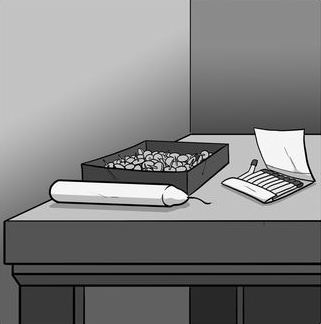
Sarah Kay Summary Response Larissa Ibarra
Sarah Kay’s “If I Should Have a Daughter” displays how she tries to walk through life with an open heart and mind. She also discusses how she always tries to stay simple with who she is and tries to stay true to herself. Another topic she discusses is how she really became a poet and how when teaching teenagers to write poetry she always tells them to write down 10 things they know to be true. Sarah Kay spreads the idea of truth and openness through “If I Should Have a Daughter.
Through “If I Should Have a Daughter” Sarah Kay demonstrates how open mindedness, open handedness, and open heartedness can improve the world because of how understanding different cultures or people would be. If someone is closed off completely they could miss the most important details of life as well as not experience anything wholeheartedly. If teachers were more accepting of every learning types and saw different perspectives new curriculums and teaching systems might be implemented. If the same philosophy was to be used by everyone in the world there would be no war, all cultures would be accepted, and there would be no prejudice. Sarah Kay was also very captivating. She had a great use of words and is honest with the audience, “my knees still buckle” (Kay). Kay also used very expressive hand gestures.  One could also tell how honest and real she was being with the audience by her tone. Along with her tone she included the audience with having the audience write down three thing they know to be true. One way I could use Kay’s talk with my own is her tone, it was calming and also very honest. “If I Should Have a Daughter” shows how one’s talk can be playful, honest, and still make you think about your decisions.
One could also tell how honest and real she was being with the audience by her tone. Along with her tone she included the audience with having the audience write down three thing they know to be true. One way I could use Kay’s talk with my own is her tone, it was calming and also very honest. “If I Should Have a Daughter” shows how one’s talk can be playful, honest, and still make you think about your decisions. Ken Robinson Summary Response Larissa Ibarra
In “How Schools Kill Creativity” Ken Robinson discusses how the arts have been considered an inferior subject for students to be invested in. He states that all children have natural talents they can offer the world, but school systems squander the hope of having an artistically inclined career. Robinson also makes the point that intelligence can come in many ways and can be experienced in many ways. Overall the video conveys that everyone has a great deal of creativity to offer.
Ken Robinson’s “How Schools Kill Creativity” effectively portrays how much students have to offer and also how schools tend to oppress the artistic, creative side of children. Robinson speaks about how intelligence is experienced through many things and how it can differ depending on the person, “And the third thing about intelligence is, it's distinct” (Robinson). Robinson also talks about a woman, Gillian Lynne, who was always told that she had learning problems. However, she just learned differently and ended up becoming a successful choreographer. If schools started catering to the arts just as much as math and science a generation of creators and new thinkers would rise. The world would become a place of efficiency and well as beauty if the artistic types were not told to hide their creativity. Along with wonderful insight on creativity Robinson also presented the information in a very effective way. He was straight forward and also included the audience with questions that made the audience want to dive deeper into the subject. While he was straight forward he also made some parts humorous a which was a good relief from all of the information. I think Robinson’s style could help me with my Ted Talk in the way that I would like to add some bits of humor into mine along with pieces that really gets the audience thinking. “How Schools Kill Creativity” shows how every person’s intelligence should be highlighted and celebrated. Sunday, March 1, 2015
Scribe 2/27/15
Work time
Conclusion Paragraph- Solutions, can be video, concept map, basically anything
Have writing and your website done
peer editing Monday and Tuesday
Subscribe to:
Comments (Atom)